
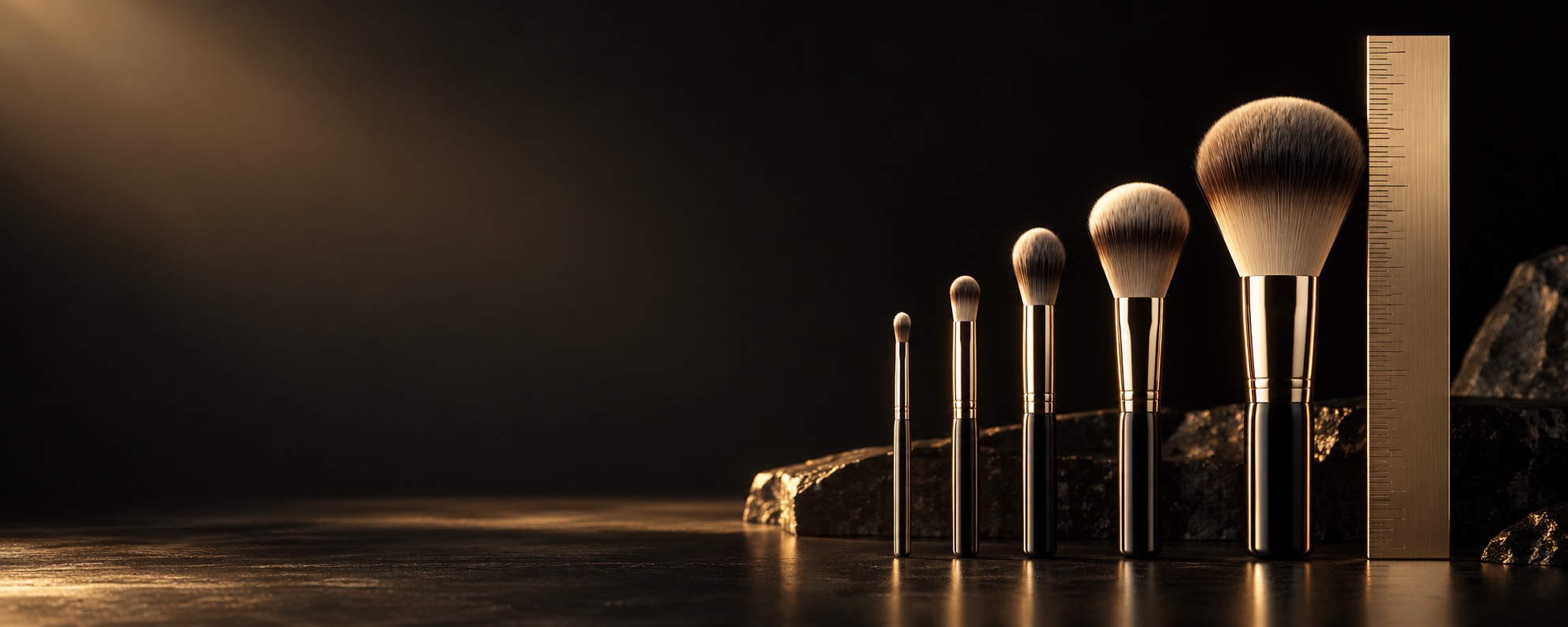
Brush names are useful shorthand, but they do not always describe the same shape or purpose across every supplier catalogue. For a brand team, the clearest starting point is the application: what product will the brush apply, where will it be used, and what result should the customer expect?
A search for “makeup brushes names and uses” is really a request to connect each name with a clear job. For product teams, that connection also gives the supplier a more specific starting point for a sample brief.
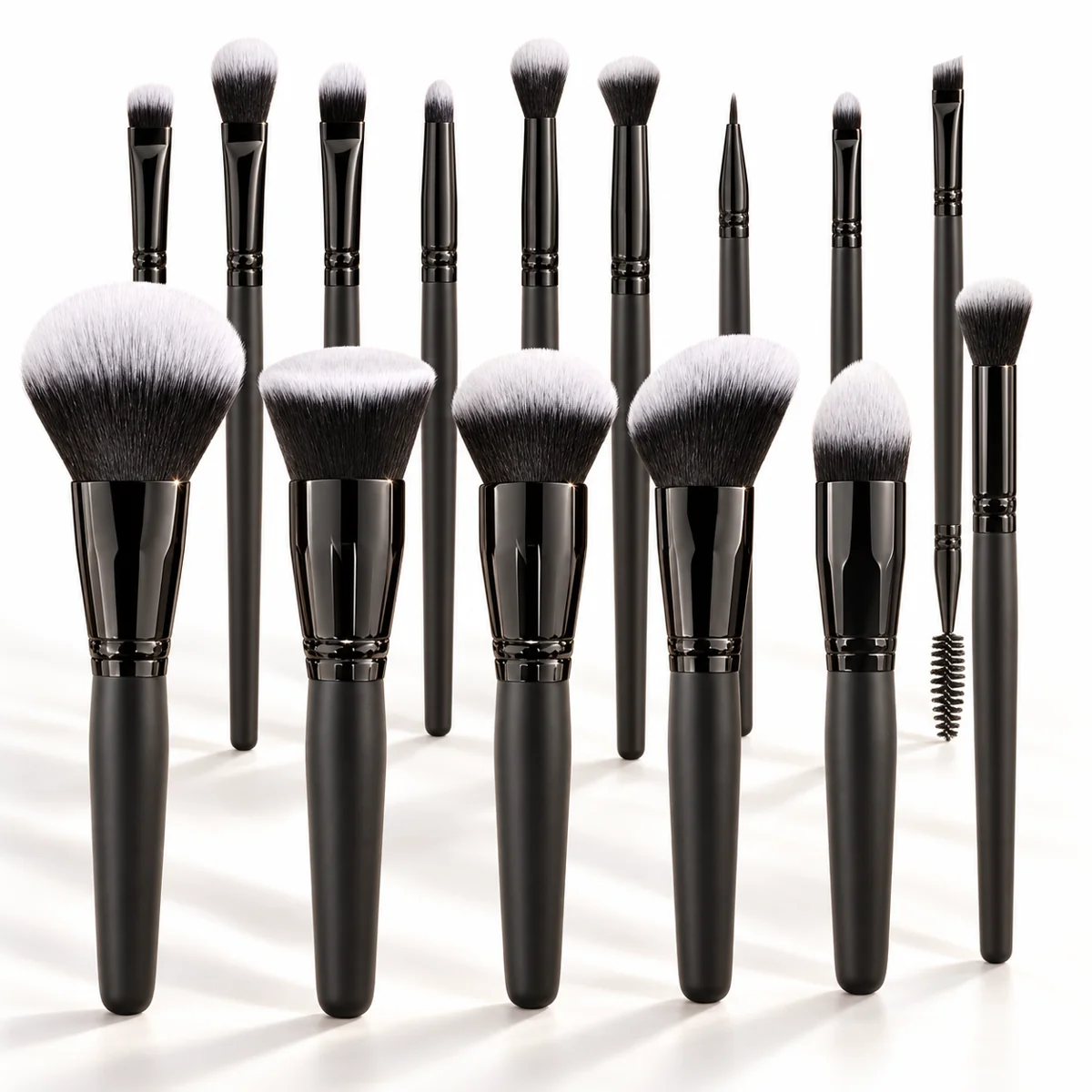
This guide groups common makeup brush types by the area and task they support. If you are researching types of makeup brushes and uses, use the groupings below to start a product discussion, then agree actual shapes, sizes and names against the product brief and approved sample.
Start with application, not the catalogue name
Before selecting a brush, define four points: the formula or product it will be paired with, the area of application, the coverage or placement the brand wants, and the customer who will use it. A name such as “foundation brush” narrows the task, but still leaves shape, dimensions and finish to specify.
Use the list below as a conversation starter. It is not a universal naming standard, and a supplier may group similar formats differently. The custom makeup brush page outlines the design variables to confirm when your chosen format needs a brand-specific shape or finish.
Face brush types and uses
- Foundation brush: intended to spread or place complexion product over larger areas of the face. The brief should identify the preferred application area, coverage direction and head profile.
- Powder brush: used to apply or distribute face powder. Specify whether the brush is intended for broad placement or more targeted use, then review its overall size and outline.
- Blush brush: designed for placing colour on the cheeks. Record the placement area and whether the concept calls for a rounded, angled or other defined silhouette.
- Contour brush: intended for more focused placement along areas selected for contouring. The shape and size should be tied to the intended placement, not chosen from the name alone.
- Concealer brush: used for more localised complexion application. Note the areas the product should reach and the level of detail expected from the head shape.
- Highlighting brush: used to place highlight product on selected areas. Define the placement zone and visual direction, then confirm a shape reference with the supplier.
For a product range centred on complexion formats, compare the actual formats available on the face brushes page. That category page covers product options; this article helps your team decide what each SKU is meant to do.
Eye brush types and uses
- Eyeshadow shader or applicator brush: applies colour over a defined part of the eyelid. Identify the intended placement and the area the brush should cover.
- Blending brush: used to soften or connect areas of eyeshadow. Define whether the brief is for broad blending, crease work or a smaller transition area.
- Crease brush: intended for more focused application around the crease area. A narrower placement task usually needs a clear size and shape reference.
- Eyeliner brush: supports controlled placement near the lash line. Specify the preferred tip profile and the intended product format.
- Smudge or detail brush: used for small-area placement or softening a defined line. Describe the target area and the level of precision the brand wants.
- Brow brush and spoolie: an angled or compact brush can place brow product, while a spoolie-style head is used to groom or distribute brow product through the hairs. Confirm whether the item is single-ended or paired with another format.
Review the available range on the eye brushes page. The product brief should still name the target application and approved dimensions, especially when a brush must fit into a coordinated eye collection.
Lip, brow and specialty brush types
A lip brush is intended for placing or shaping lip product on the lips. A brand brief can clarify whether the concept is for a compact detail tip, a broader applicator or a format that belongs inside a set. For brow work, distinguish the brush that places product from a spoolie that helps groom and distribute it.
Specialty formats include fan, angled, dual-ended, travel or other focused shapes. Names alone are not enough to establish construction or SKU contents. For a dual-ended design, specify both ends and how the complete item will be presented. The lip and brow range and specialty brush range show where these categories sit in the current site structure.
Turn brush types into a product brief
A usable brief connects each brush type with a specific job. Create one line per proposed SKU and record:
- Working name and item code: use one name consistently across the range sheet, artwork and sample comments.
- Intended use: face, eye, lip or brow area; product format; placement area; and desired application result.
- Shape reference: a drawing, photo, physical sample or approved supplier reference. Label views and identify the head outline you want reviewed.
- Dimensions: note confirmed measurements separately from estimates. The makeup brush size guide can help organise ferrule and handle dimensions.
- Construction and branding: list material preferences, handle direction, ferrule finish, logo treatment and any open decisions for the supplier to confirm.
- Commercial format: say whether the brush is sold individually or included in a named set, and list the components that belong to that SKU.
When several brushes will launch together, first define what each one contributes. Then decide whether the range needs a coordinated set. For assortment count and launch architecture, see the separate makeup brush set planning guide.
Review the sample against its intended use
During sample review, compare each brush with the line item in your brief. Check that the head profile, scale, orientation, handle and logo match the reference you approved. If the application or intended area changes, record the change rather than relying on a name such as “blush” or “blending” to communicate it.
Keep comments specific: identify the SKU, the view or area being discussed, what differs from the reference, and what needs approval next. The sample checklist helps structure the broader visual and assembly review, while the RFQ checklist covers the information to send before supplier quotations.
Frequently asked questions
Are makeup brush names standard across suppliers?
Names are helpful shorthand, but catalogues may label similar formats differently. Share the intended use, shape reference and dimensions so the supplier can confirm the exact item being discussed.
Can one brush type serve more than one purpose?
A brand may position one format for more than one task. State the primary use and any secondary use in the brief, then review the selected sample against both requirements.
How many brush types should go into a makeup brush set?
There is no fixed answer for every launch. Start with the products and applications your range needs to support, then plan the piece count, price architecture and packaging in the set planning guide.
Clear brush naming makes a range easier to compare, sample and reorder. Begin with the task, pair it with a visual and dimensional reference, and keep open choices visible. To discuss a private label range, share your proposed brush types and product brief through the HEXUE enquiry form.